Table Of Content824.1
AMPHIBIA: ANURA: CRYPTOBATRACHIDAE Stefania ackawaio
Catalogue of American Amphibians and Reptiles. gion has many small tubercles. Vomerine processes
each bear 6-9 teeth. The dorsal skin is shagreened.
MacCulloch, R.D. and A. Lathrop. 2006. Stefania ack- The first finger is longer than the second by approxi-
a waio. mately the length of the ultimate phalange of the first
finger. Well-developed discs are present on all digits;
Stefania ackawaio MacCulloch and Lathrop toe webbing formula is 1 (2-2%) - (2-2%) 11 73/62) - (2%
- -
Ackawaio Stefania; Rana Stefania Ackawaio -3) 111 (2Yr2H) (3-3%) IV (3-3%) (2-2%) V. The
largest finger disc is 66-75% of the tympanum diam-
Stefania ackawaio MacCulloch and Lathrop 2002: eter. The color pattern is medium brown or grayish
334. Type-locality: "northeast plateau of Mount brown dorsally, with darker crossbands on limbs;
Ayanganna, Guyana (05" 24' N, 059" 57' W) ele- flanks and venter are brown or gray with white mot-
vation 1490 m." Holotype, Royal Ontario Museum tling. In preservative the dorsum changes to gray.
(ROM) 39473, adult male, collected by A. Lath-
rop, 29 October 2000 (examined by authors). DIAGNOSIS. Stefania ackawaio can be distin-
guished from S. evansi and S. scalae by its reduced
CONTENT. No subspecies are known. toe webbing (% webbed in S. evansi and S. scalae),
from S. percristata by the absence of large frontopari-
DEFINITION.A dult males to 48 mm SVL, females eta1 crests (present in S. percristata), from S. ayan-
to 66 mm; juveniles attain independence at about 20 gannae by color pattern and its short second finger,
mm SVL. Head length is equal to or slightly greater which does not contact the terminal phalange of the
than width. Frontoparietal ridges are present but re- first finger when adpressed (reaches the first finger's
duced. Th-e canthus rostra li-s is distinct, angula r, and disc in S. ayangannae), from S. roraimae by its low
concave. Diameter of the tympanum is half the dia- frontoparietal ridges and shagreened dorsal skin (no
meter of the eye, separated from eye by a distance ridges, smooth skin in S. roraimae), and from S.
equal to the tympanum diameter. The tympanic re- woodleyi by its tubercular tympanic region (only a few
small tubercles in S. woodleyr), color pattern and ele-
vational distribution. Stefania ackawaio differs from
all other members of the narrow-headed S. evansi
group (S. marahuaquensis, S. riae, and S. tamacua-
rina) by the presence of distinct, albeit reduced, fron-
toparietal crests. All other species of Stefania are in
the S. goini group, and can be distinguished from S.
ackawaio by head proportions (wider than long in the
S. goini group).
DESCRIPTIONS. Descriptions of adults and juve-
niles are in MacCulloch and Lathrop (2002) and Mac-
Culloch et al. (2006). Eggs and neonates and the
mating call are unknown.
ILLUSTRATIONS. Color photographs are in Mac-
Culloch and Lathrop (2002) and MacCulloch et al.
(2006).
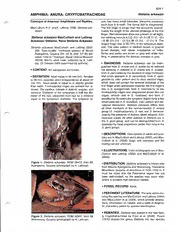
Figure 1. Stefania ackawaio, ROM 39473, from Mt.
DISTRIBUTION. Stefania ackawaio is known only
Ayanganna, Guyana (photograph by A. Lathrop).
from Mounts Ayanganna and Wokomung, Pakaraima
Mountains, Guyana, at elevations of 1234-1550 m. It
must be noted that the Pakaraima region has not
been well-studied, so the species may occur else-
where in suitable high-elevation habitat.
FOSSIL RECORD. None.
PERTINENT LITERATURE. The only works cov-
ering this species are MacCulloch and Lathrop (2002)
and MacCulloch et al (2006), which provide descrip-
tions, information on habitat, and a table of diagnos-
tic characters useful for species identification.
REMARKS. Stefania was placed in the new fami-
Figure 2. Stefania ackawaio, ROM 42807, from Mt. ly Cryptobatrachidae by Frost et al. (2006). Rivero
Wokomung, Guyana (photograph by A. Lathrop). (1970) divided the genus Stefania into two species
2C6, Canada (email: [email protected])
Primary editor for this account, Twan Leenders
Published 15 December 2006 and Copyright O 2006
Venezuela
by the Society for the Study of Amphibians and
Reptiles.
-
-
Guyana
Suriname
.
~
..
Brazil
--
- . ~
o ,-m ma a n00 n --'
Map. Distribution of Stefania ackawaio. The circle in-
dicates the type-locality, Mt. Ayanganna. The solid
dot indicates the other known locality, Mt. Woko-
mung. Map courtesy of Blake Matejowsky.
groups; Stefania ackawaio is in the S. evansi group
by virtue of its head proportions (head length equal to
or greater than width in the S. evansi group). The
Spanish vernacular name is in accordance with
names proposed by Barrio-Amoros (1998), and the
English vernacular name follows this example.
ETYMOLOGY. The specific epithet is a noun in
apposition, and refers to the Ackawaio people, who
live in the area where the type specimens were col-
lected.
LITERATURE CITED
Barrio-Amoros, C.L. 1998. Sistematica y biogeogra-
fia de 10s anfibios (Amphibia) de Venezuela. Acta
Biol. Venez. 18:l-93.
Frost, D.R., T. Grant, J. Faivovich, R.H. Bain, A.
Haas, C.F.B. Haddad, R.O. de Sa, A. Channing,
M. Wilkinson, S.C. Donnellan, C.J. Raxworthy,
J.A. Campbell, B.L. Blotto, P. Moler, R.C. Drewes,
R.A. Nussbaum, J.D. Lynch, D.M. Green, and
W.C. Wheeler. 2006. The amphibian tree of life.
Bull. Amer. Mus. Nat. Hist. (297):l-370.
MacCulloch, R.D. and A. Lathrop. 2002. Exceptional
diversity of Stefania (Anura: Hylidae) on Mount
Ayanganna, Guyana; three new species and new
distribution records. Herpetologica 58:327-346.
-, A. Lathrop, and S.Z. Khan. 2006. Exceptional di-
versity of Stefania (Anura: Cryptobatrachidae) ll:
six species from Mount Wokomung, Guyana.
Phyllomedusa 5:31-42.
Rivero, J. 1970. On the origin, endemism, and distri-
bution of the genus Stefania Rivero (Amphibia,
Salientia) with the description of a new species
from southeastern Venezuela. Bol. Soc. Venezo-
lana Cien. Nat. 28:456-481.
Ross D. MacCulloch and Amy Lathrop, Centre for
Biodiversity and Conservation Biology, Royal Ontario
Museum, 100 Queen's Park, Toronto, Ontario M5S