Table Of ContentAMPHIBIA: ANURA: CRYPTOBATRACHIDAE Stefania woodleyi
Catalogue of American Amphibians and Reptiles. to granular. Rounded warts are present in the tempo-
ral and post-tympanic regions, with low warts also
MacCulloch, R.D. and A. Lathrop. 2006. Stefania present in the loreal region. The largest finger disc is
woodleyi. equal to half the tympanum diameter. The hands and
feet have low, indistinct supernumerary tubercles.
Stefania woodleyi Rivero Toe webbing formula is 1 (2+-2%) - 2%1 1 (2-2) - (3-3+)
Woodley's Stefania; Rana Stefania de 111 (2%-2%) - (3&3%) IV 3%- (2+-2%) v.
Woodley Dorsal surfaces are medium brown with irregular
ochre spots or reticulations. Some individuals have
an ochre or cream interorbital bar and dorsolateral
Stefania woodleyi Rivero 1968:147. Type-locality, stripes. Laterally, the head is ochre with a dark brown
'...from a rocky stream, slope Mt. Kanaima, nr. canthal stripe and irregular medium brown spots in
Potaro R. Brit. Guiana." Holotype, British Museum loreal and temporal regions. A dark brown supratym-
of Natural History (BMNH) 1967.654, adult fe- panic stripe continues to the groin. Flanks and groin
male, collected 17 August 1959 by J.D. Woodley are medium to dark brown with irregular ochre spots.
(examined by authors). Dorsal surfaces of thighs and arms are ochre with
dark brown transverse bars continuing onto anterior
CONTENT. No subspecies are recognized. surfaces of thighs; posterior surfaces of thighs are
medium brown with white spots. Shanks and tarsi are
DEFINITION. Adults range in SVL from 35-46 mm ochre with dark brown spots or bars. Throat and ven-
(males) and 44-60 mm (females). Head width is 98% tral surfaces of thighs are medium brown with cream
head length; the distance between nostrils is 7&75% to ochre mottling; ventral surfaces of shanks, tarsi
of the interorbital distance and 1.75 times the dis- and arms are immaculate medium brown. The color
tance from nostril to tip of snout. Interorbital space is pattern on the chest and belly varies from medium
slightly less than width of upper eyelid. Frontoparietal brown with ochre mottling to ochre with brown mot-
ridges are present but reduced. The tympanum is se- tling. In preservative the ochre fades to light brown
parated from the eye by a distance equal to two- and the cream to white. Juvenile coloration is similar
thirds of the tympanum diameter. Vomerine teeth to that of adults.
number 5-6. The skin on the dorsum is shagreened
DIAGNOSIS. Stefania woodleyi differs from S.
evansi and S. scalae by its basal toe webbing, with
2-3 phalanges free (1-2 free phalanges in S. evansi
and S. scalae), from S. marahuaquensis and S. ror-
aimae by its coarsely shagreened to granular skin
(smooth), from S. peicristaja by the absence of en-
larged frontoparietal crests (present), from S. tama-
cuarina by its concave canthus rostralis (straight),
and from S. ackawaio, S. ayangannae and S. riae by
the ratio of the largest finger disc to the tympanum
diameter (50% in S. woodleyi, 75% in the other three
species). Furthermore, the mottled color pattern in S.
woodleyi has not been reported in any other member
of the genus. All other Stefania are in the S. goini
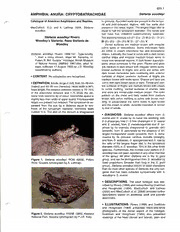
Figure 1. Stefania woodleyi, ROM 42832, Potaro group, and can be distinguished from S. woodleyi by
River, Guyana (photograph by A. Lathrop). head proportions (broader than long in the S. goini
group). Stefania woodleyi occurs at lower elevations
than do most other species of Stefania; the only con-
gener that has been collected sympatrically with S.
woodleyi is S. evansi.
DESCRIPTIONS. The adult holotype was des-
cribed by Rivero (19 68) and redescribed by Duellman
and Hoogmoed (1984). MacCulloch and Lathrop
(2002) and MacCulloch et al. (2006) provided further
descriptions based on additional adult and juvenile
specimens.
ILLUSTRATIONS. Rivero (1968) and Duellman
and Hoogmoed (1984) presented black-and-white
photographs of the dorsal aspect of the holotype.
Figure 2. Stefania woodleyi, IRSNB 13802, Kaieteur Duellman and Hoogmoed (1984) also presented
National Park, Guyana (photograph by P.J.R. Kok). drawings of the head (dorsal and lateral), palm and
who collected the holotype.
LITERATURE CITED
Barrio-Amorb, C.L. 1998. Sistematica y biogeogra-
fia de 10s anfibios (Amphibia) de Venezuela. Acta
'3
Biol. Venez. 18:l-93.
': ?
Duellman, W.E. and M.S. Hoogmoed. 1984. The tax-
Guyana onomy and phylogenetic relationships of the hylid
Sunname frog genus Stefania. Misc. Pub. Univ. Kansas
Mus. Nat. Hist. (75):l-39.
Frank, N. and E. Ramus. 1995. A Complete Guide to
I Scientific and Common Names of Reptiles and
Brazil
Amphibians of the World. NG Publ., Inc., Potts-
-
ville, Pennsylvania.
Frost, D.R., T. Grant, J. Faivovich, R.H. Bain, A.
Map. Distribution of Stefania woodleyi. The circled Haas, C.F.B. Haddad, R.O. de Sa, A. Channing,
dot indicates the type-locality, while other localities M. Wilkinson, S.C. Donnellan, C.J. Raxworthy,
are represented by solid dots. Map courtesy of Blake J.A. Campbell, B.L. Blotto, P. Moler, R.C. Drewes,
Matejowsky. R.A. Nussbaum, J.D. Lynch, D.M. Green, and
W.C. Wheeler. 2006. The amphibian tree of life.
sole. A color photograph is in MacCulloch et al.
Bull. Amer. Mus. Nat. Hist. (297):l-370.
(2006).
Goin, C.J. and J.D. Woodley. 1969. A new tree-frog
from Guyana. Zool. J. Linn. Soc. 48:135-140.
DISTRIBUTION. The known range is in the east-
MacCulloch, R.D. and A. Lathrop. 2002. Exceptional
ern portion of the Pakaraima Mountain region, Guy-
diversity of Stefania (Anura: Hylidae) on Mount
ana, at elevations from 100 to 900 m. All specimens
Ayanganna, Guyana; three new species and new
were collected on or near rocky stream banks in
distribution records. Herpetologica 58:327-346.
forests. At several locations S. woodleyi and S. evan- -, A. Lathrop, and S.Z. Khan. 2006. Exceptional di-
si were collected syntopically. More detail is in Mac-
versity of Stefania (Anura: Cryptobatrachidae) ll:
Culloch and Lathrop (2002) and MacCulloch et al.
six species from Mount Wokomung, Guyana.
(2006).
Phyllomedusa 5:31-42.
Rivero, J. 1968 ("1966"). Notes on the genus Crypto-
FOSSIL RECORD. None. batrachus (Amphibia, Salientia) with the descrip-
tion of a new race and four new species of a new
PERTINENT LITERATURE.A description of the genus of hylid frogs. Carib. J. Sci. 6:137-149.
type-locality is in Goin and Woodley (1969). -. 1970. On the origin, endemism, and distribution of
Duellman and Hoogmoed (1984) proposed a phy- the genus Stefania Rivero (Amphibia, Salientia)
logeny of the genus that included this species. Atable with the description of a new species from south-
of diagnostic characters useful for species identifica- eastern Venezuela. Bol. Soc. Venezolana Cien.
tion is in MacCulloch and Lathrop (2002) and a key to Nat. 28:456-481.
species is in Seiiaris et al. (1997). An additional Seiiaris, J.C., J. Ayarzaguena, and S. Gorzula. 1997
description is in MacCulloch et al (2006). Information ("1996"). Revision taxonomica del genero Stef-
on habitat and reproduction is in MacCulloch and ania (Anura: Hylidae) en Venezuela con la des-
Lathrop (2002), MacCulloch et al. (2006), and Rivero cripcion de cinco nuevas especies. Publ. Asoc.
(19 68). Amigos de DoRana (7):l-57.
REMARKS. Stefania was placed in the new fami-
ly Cryptobatrachidae by Frost et al. (2006). Rivero Ross D. MacCulloch and Amy Lathrop, Centre for
(1970) divided the genus Stefania into two species Biodiversity and Conservation Biology, Royal Ontario
groups on the basis of head proportions; Stefania Museum, 100 Queen's Park, Toronto, Ontario M5S
woodleyi is in the S. evansi group. The Spanish ver- 2C6, Canada (email: rossm Q rom.on.ca).
nacular name "Rana Stefania de Woodley" is in ac-
cordance with Barrio-Amorb (19 98). Frank and Ra- Primary editor for this account, Twan Leenders.
mus (1995) proposed the English vernacular name
'Woodley's Treefrog"; we feel that the use of "tree- Published 15 December 2006 and Copyright O 2006
frog" for Stefania is imprecise and confusing, and by the Society for the Study of Amphibians and
therefore propose the name "Woodley's Stefania", Reptiles.
which is in accordance with names proposed for
other Stefania, and follows the Spanish example.
ETYMOLOGY. The specific epithet, in the mascu-
line genetive, is a patronym honoring J.D. Woodley,